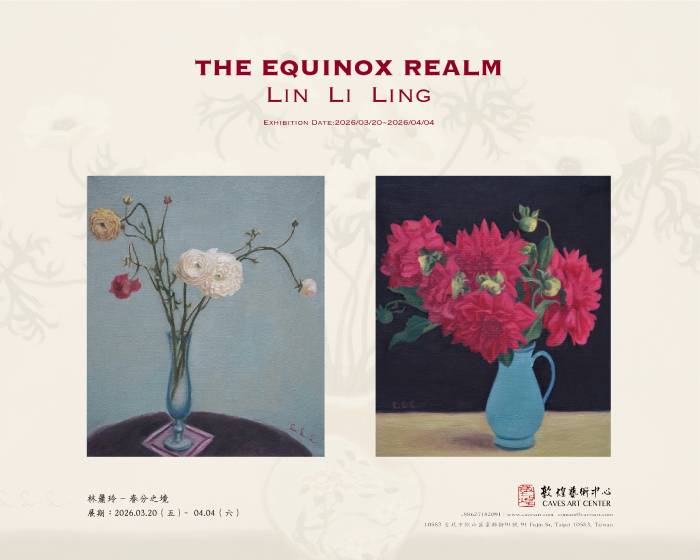
展期:2026-03-20 ~ 2026-04-04
地點:富錦街91號(敦煌藝術中心)
參展藝術家:林麗玲
林麗玲 - 春分之境
Lin Li Ling - The Equinox Realm
春分,是一年中晝夜均分的時刻。驚蟄後雷雨喚醒沉睡的大地,萬物萌動,草木吐芽,生命在光與暗的平衡間再次甦醒。此次展覽「春分之境」正是在這個象徵轉折與更新的時節,邀請觀者走入藝術家林麗玲靜謐又生機盎然的花卉世界。
林麗玲出生於臺南鄉間,童年的生活環境質樸而含蓄。在那個避談情感與慾望的農村社會裡,想像與繪畫成為她最早的出口。她曾在自述中回憶,孤獨的童年讓她學會專注與幻想,而畫畫則是與世界交流的方式。1989年她畢業於東海大學美術系,而後遠赴法國,長年生活與創作於巴黎。在異鄉的歲月裡,她經歷貧窮、勞動與文化差異,也在歐洲藝術傳統與自身東方文化間,逐漸形塑出獨特的創作語言。
藝術史的脈絡中,林麗玲的作品常被提及與西方人體藝術傳統對話,但她的創作核心始終指向更內在的情感世界。她的畫面帶有曖昧的氣息,人物的目光、姿態與花卉並置,既是象徵,也是情感的隱喻。正如評論者所指出的,她的繪畫在東方與西方之間建立了微妙的平衡,西方油畫的媒材與光影承載著東方人物的面容與情緒,使畫面既古典又當代。
然而,在她長年的創作脈絡中,花卉始終佔據重要的位置。花除了是靜物描繪,更是生命與慾望的象徵,芍藥、山茶、百合、櫻花、水仙……以沉靜的姿態佇立於畫面中,這些花朵有時盛放;有時含苞;有時微微傾斜;有時昂然挺立,彷彿帶著情緒般呼吸。從大型三聯幅的《麗春花》到細緻的小幅花卉作品,花枝與葉脈被細膩地描繪,色彩清澈而柔和,構圖則帶有一種古典的穩定感與東方屏風般的節奏。
這些作品中,花卉在展現自然之餘更像是情感的肖像。林麗玲在創作過程中反覆調整花苞的方向、花瓣的色澤與枝葉的姿態,使畫面中的每一個細節都具有生命的氣息。她的花並不張揚,而是以沉靜、節制的樣態存在,這種靜謐,恰恰讓觀者在凝視中感受到時間的流動。花開花落間,蘊含著生命短暫而燦爛的本質。
從某種意義上說,林麗玲的花卉繪畫延續了東方文化中「以花喻人」的傳統。自古以來,花朵象徵著情感與人格,梅有孤高、蘭有幽雅、牡丹有華麗、菊有清逸……林麗玲則在這樣的文化脈絡上,加入更私密而當代的感性,柔軟而強烈。
「春分之境」也因此呈現出與以往不同的觀看方式。過去觀者熟悉的林麗玲,或許更多來自她的人物畫與敘事性場景;然這一次,我們將視線聚焦於她的花卉作品。春分象徵平衡與新生,而林麗玲的花卉世界也恰好存在於這樣的平衡中——自然與人心、東方與西方、靜止與生長。當觀者走進展覽空間時,彷彿進入一個緩慢沉靜的季節,枝葉延展,花朵綻放,光影在畫布上停留,開展出經歲月沉澱後依然持續生長的力量。
正如春分之後的大地,經歷風雨與寒冬,萬物仍然再次甦醒。林麗玲的花卉繪畫是一座盛開於現實與想像間的花園,在幽靜中發芽茁壯,讓人感受到生命本身的溫柔與韌性。
The Spring Equinox marks the moment in the year when day and night stand in perfect balance. After the thunderous rains of Awakening of Insects stir the sleeping earth, all living things begin to awaken: plants sprout, buds emerge, and life stirs once again between light and shadow.
The exhibition “The Equinox Realm” invites viewers, at this moment of transition and renewal, to enter artist Lin Li Ling’s tranquil yet vibrant world of flowers.
Born in rural Tainan, Lin grew up in an environment that was simple and reserved. In a society where emotions and desire were seldom openly expressed, imagination and drawing became her earliest outlets. She later recalled that solitude taught her focus and reverie, and that painting became her way of engaging with the world. After graduating from the Department of Fine Arts at Tunghai University in 1989, she moved to France and has since lived and worked in Paris. Through years shaped by hardship, labor, and cultural displacement, she gradually developed a distinctive artistic language at the intersection of European tradition and her own Eastern cultural roots.
Within the context of art history, Lin’s work is often discussed in relation to Western figurative painting. Yet the core of her practice remains deeply inward. Her images carry an understated ambiguity: the gaze and posture of her figures, often placed alongside flowers, function both as symbols and as emotional metaphors. As critics have noted, her work establishes a delicate balance between East and West. The medium and light of Western oil painting hold the faces and emotional sensibilities of Eastern subjects, rendering her paintings both classical and contemporary.
Throughout her long artistic trajectory, flowers have remained central. More than still-life subjects, they embody life and desire. Peonies, camellias, lilies, cherry blossoms, and narcissus stand quietly within the pictorial space. At times in full bloom, at times in bud, at times gently inclined, at times upright with quiet dignity, they seem to breathe with emotion. From large-scale triptychs such as “Springtime Splendor” to more intimate floral studies, branches and leaf veins are rendered with precision, colors remain clear and restrained, and compositions convey a classical stability alongside a rhythm reminiscent of East Asian folding screens.
In these works, flowers extend beyond representations of nature to become portraits of emotion. Lin repeatedly adjusts the direction of buds, the tones of petals, and the gestures of stems and leaves, imbuing every detail with a sense of life. Her flowers are never ostentatious; instead, they exist in a state of quiet restraint. This stillness allows viewers, through sustained looking, to perceive the passage of time. In the cycle of blooming and fading lies the fleeting yet radiant essence of life.
In many ways, Lin’s floral paintings continue the East Asian tradition of using flowers as metaphors for human character. Since antiquity, flowers have symbolized emotion and virtue: the plum for its resilience, the orchid for its elegance, the peony for its richness, and the chrysanthemum for its purity. Building upon this tradition, Lin introduces a more intimate and contemporary sensibility, one that is both tender and intense.
“The Equinox Realm” thus offers a different way of encountering Lin’s work. While audiences may be more familiar with her figurative and narrative paintings, this exhibition focuses entirely on her floral practice. The Spring Equinox signifies balance and renewal, and Lin’s floral world exists precisely within such equilibrium—between nature and the human spirit, between East and West, between stillness and growth. Entering the exhibition space, viewers step into a slow, contemplative season: branches extend, blossoms unfold, and light settles upon the canvas, revealing a vitality that continues to grow through time.
Just as the earth awakens again after storms and winter, Lin Li Ling’s floral paintings form a garden blooming between reality and imagination. In quiet stillness, they take root and flourish, conveying the tenderness and resilience inherent in life itself.